Vision insurance
Your vision benefits. A clearer starting point.
Routine vision benefits can help with specific services, but the details are in your exact plan.
Typically included
- A routine eye examOften once in a defined benefit period.
- An eyewear allowanceA contribution toward glasses or contacts, not usually the full cost.
Often not included
- Medical eye visitsAn eye-health concern is usually a medical claim.
- The contact lens fittingFrequently a separate charge.
- Additional testingDepends on the plan and the reason for the test.

Plans we accept
Medical and vision plans for your care.
Common here
Coverage types
You may have two kinds of coverage.
Many people have both and do not realize it. Tell the office both and the staff will work out which one to bill.
Vision plans
Covers a routine check-up and puts money toward glasses or contacts. Usually comes through work.
- EyeMed Insight Network only
- March Vision Care
- Spectera
- VSP Vision Care
- Superior Vision
- OptiCare
- Premier Eye Care
- Unum
Medical insurance
Covers eye problems. Dry eye, pink eye, floaters, glaucoma and the yearly diabetic eye exam.
Medicare
- Original Medicare
- Anthem Medicare Advantage
- Humana Medicare Advantage
- UnitedHealthcare Medicare Advantage
Indiana Medicaid
- Indiana Medicaid
- MHS (Managed Health Services)
- Anthem Hoosier Healthwise
- Anthem Healthy Indiana Plan (HIP)
- CareSource
Other medical plans
- Health Alliance
- Medical Mutual
- UnitedHealthcare
- Wellcare (Allwell)
Plan list last updated September 8, 2026. Staff confirm your plan when they call.
Helpful guides
Answers for the step you’re on.
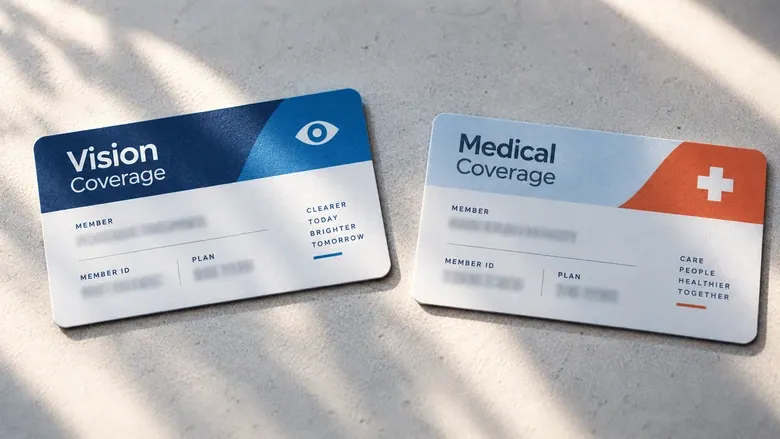 Vision insurance or medical insurance: which applies to an eye visit?Your reason for care, exact plan and selected doctor all matter. Here is how to check coverage without guessing which card applies.
 How much does an eye exam cost without insurance?Compare a $95 self-pay comprehensive eye exam with AVCC's $160 complete new-patient self-pay exam and contact lens fitting. See inclusions.