Traveling with contacts: a practical packing and care checklist
A little preparation helps you keep the same contact lens habits away from home, including a plan for switching to glasses.
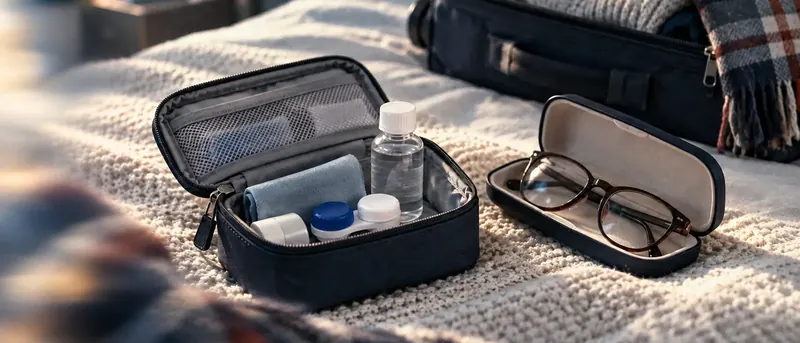
A change of routine can turn a small contact lens problem into an inconvenient travel day. Your solution bottle is at home, your glasses are in checked luggage, or an overnight journey makes it tempting to stretch your wear schedule.
Pack for the moment you need to take your lenses out, as well as for the days you expect to wear them. A workable backup is part of the trip.
Put backup glasses within reach
Keep glasses with your current prescription in a protective case where you can access them during the journey. Add the contact lenses and supplies appropriate to your prescribed routine. For reusable lenses, that includes the recommended disinfecting solution and a suitable lens case.
Check your supplies before departure. If a prescription or contact lens assessment may need attention, contact the office early and ask what is required. A message does not guarantee a refill, appointment or delivery by a particular travel date.
Our contact lens exam guide explains why a lens visit is separate from simply buying more lenses.
Keep the same care rules away from home
The CDC's contact lens guidance emphasizes clean, completely dry hands, recommended solution and keeping lenses away from water. Never use tap water or saliva as a substitute for lens care.
Do not top off old case solution with fresh solution. Follow the cleaning and storage instructions for your specific lenses and products. Keep enough supplies available so a late arrival does not force a choice between skipping care and improvising.
A travel-size bottle still needs to be the right product. Keep it in its labeled container and check expiry and storage instructions. If transport rules limit what you can carry, check those rules before packing and arrange appropriate supplies.
Plan for sleep, showers and swimming
Follow your prescribed wear and replacement schedule even when your day crosses time zones. Sleeping in lenses is not a travel shortcut; avoid it unless your eye-care provider has specifically directed otherwise. Remove lenses before showering or swimming.
For an overnight flight or a long ride, decide in advance when and where you can safely remove and care for your lenses. If that will be awkward, ask your clinician about using glasses for that part of the journey. Do not change lens type or wear schedule without advice.
Have a plan for discomfort away from home
If lenses cause discomfort, remove them and contact an eye-care provider. Do not keep reinserting them to see whether the problem passes. Pain, redness, light sensitivity, discharge or reduced vision deserves prompt medical attention; sudden vision loss or severe pain needs urgent care.
Save your usual office's phone number before leaving, but do not assume it can provide immediate care wherever you are. Use our red-eye warning-sign guide to recognize when an online message is the wrong route.
Common questions
Are backup glasses necessary for a short trip?
Yes. They give you an alternative if lenses need to come out or a supply is lost. The CDC specifically recommends carrying backup glasses.
Can I use water if I run out of solution?
No. Keep contacts away from water and use the care products recommended for your lenses. Switch to glasses and ask a clinician how to proceed.
Can the office guarantee lenses before I leave?
Ask about the actual prescription, appointment and supply steps. Do not assume a turnaround time from a general web article. Review AVCC contact lens care or contact your Aurora, Greensburg or Richmond office before your travel date.
Sources
What your visit includes.
No insurance? You can still ask about care. Compare the visit, the fee, and what is separate before sharing contact details.
- Cost
- $160 total self-pay, exam and fitting together Returning contact lens patients seen in the last three years pay $130. Your lens supply is extra.
- When
- You choose the days Share your preferred days. The office confirms a time.
- Time to allow
- 45 to 60 minutes Total time onsite, including check-in.
Helpful guides for the step you’re on.
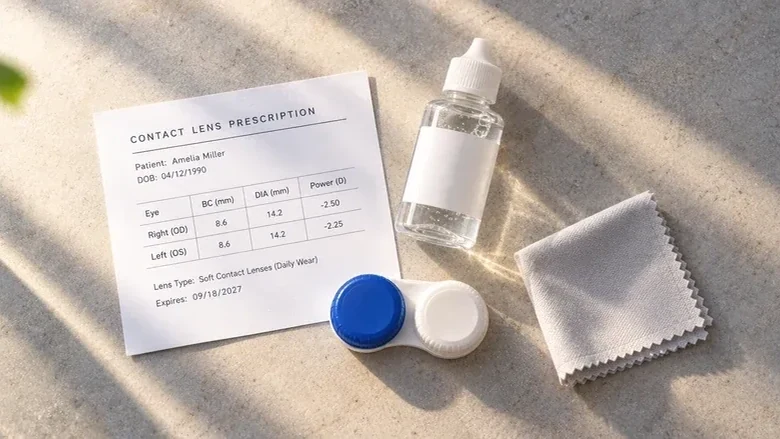 What is included in a contact lens exam, and what may cost extra?$160 self-pay covers the eye exam and contact lens fitting for new patients and first-time wearers. See trial lenses, training and 30-day follow-up details.
 Red eye or sudden vision changes: when not to wait for an online requestSome eye symptoms need immediate help, not a routine request. Recognize warning signs and communicate clearly without trying to diagnose yourself.