Headlight glare and night-driving changes: what to bring up at your exam
Describe what headlights and road signs look like, how the problem began and which driving tasks have become difficult.

Headlights seem brighter than they used to. Road signs are harder to read after dark, or you have started choosing daytime trips because the drive home feels difficult. These are useful changes to discuss at an eye examination.
If vision changes suddenly, or you have severe pain, new flashes or a shadow across your sight, seek urgent eye care or an emergency department. Do not wait for a routine appointment.
Describe the task that has become difficult
Start with a concrete example. “Oncoming headlights spread across the road” tells the clinician more than “My night vision is bad.” Note when you first noticed it and whether it has gradually become more frequent.
Write down whether the problem occurs in rain, on unlit roads or around particular lights. Include whether you notice it with glasses, contacts or both. Tell the clinician if you have begun missing signs, avoiding routes or asking someone else to drive.
Do not recreate an unsafe driving situation to collect examples. A note about what has already happened is enough to start the conversation.
Ask about possible causes without choosing one
Cataracts can cause trouble seeing at night, halos and headlights that seem too bright. The National Eye Institute also notes that these symptoms can occur with other eye problems. A symptom list cannot decide the diagnosis.
Bring your current glasses, contact lens details and medication list. Tell the clinician about previous eye care and any recent changes. Ask whether the examination findings explain what you are experiencing and whether further testing or referral is recommended.
AVCC cataract consultation information explains that starting point. A consultation, specialist referral and surgery are separate steps. Our cataract consultation guide can help you prepare questions without assuming surgery is your next step.
AVCC cataract consultation information
Make safety part of the plan now
If you cannot see well enough to drive safely, arrange another driver or transport rather than waiting for an examination to change your routine. A future visit or a new pair of glasses is not a guarantee that night driving will be safe.
Ask about dilation when planning the appointment, since it can affect the trip home. Let the office know about transport or work constraints before the time is confirmed. Avoid building the day around an unconfirmed request.
If a product is suggested, ask what specific finding or task it is intended to help. Do not assume a lens label or tint resolves every reason for headlight glare.
Bring the practical questions, too
When requesting an evaluation, describe the change rather than asking only for a glasses update. Ask whether the planned appointment is a routine vision examination or a medical assessment, what it includes and what additional testing might cost.
The vision versus medical insurance guide explains why your reason for care matters. For local scheduling, contact your selected Aurora, Greensburg or Richmond office.
Vision versus medical insurance guide
Aurora, Greensburg or Richmond office
Common questions
Does headlight glare always mean cataracts?
No. Cataracts are one possible explanation. An examination is needed to assess the cause and appropriate next step.
Should I wait for new glasses before changing how I drive?
If your vision feels unsafe now, arrange other transport now. Discuss driving difficulties and any proposed correction with your clinician.
Is a sudden change the same as gradual glare?
No. Sudden vision loss, new flashes or a curtain-like shadow needs immediate assessment rather than a routine request response. Request an evaluation for gradual changes. For sudden warning signs, seek urgent care immediately.
Sources
- Cataracts (NEI)
- Retinal Detachment (NEI)
What your visit includes.
No insurance? You can still ask about care. Compare the visit, the fee, and what is separate before sharing contact details.
- Cost
- $95 self-pay Eyewear, contact lens fitting and additional testing are separate.
- When
- You choose the days Share your preferred days. The office confirms a time.
- Time to allow
- 30 to 45 minutes Total time onsite, including check-in.
Helpful guides for the step you’re on.
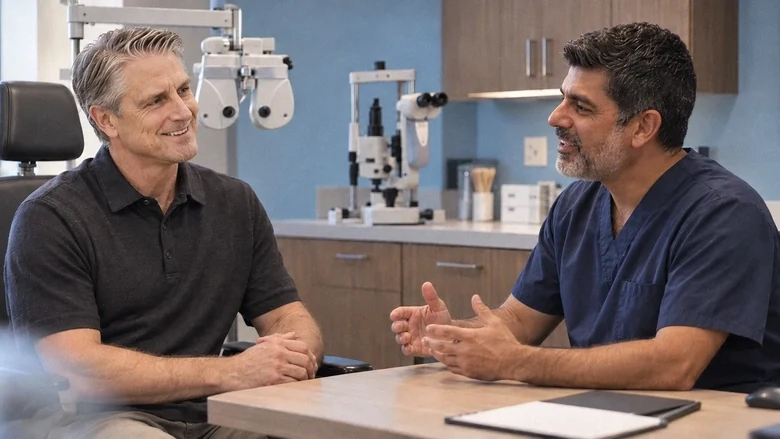 What happens at a cataract consultation?Know what a cataract evaluation can answer, how to prepare and why a consultation, specialist referral and surgery are separate decisions.
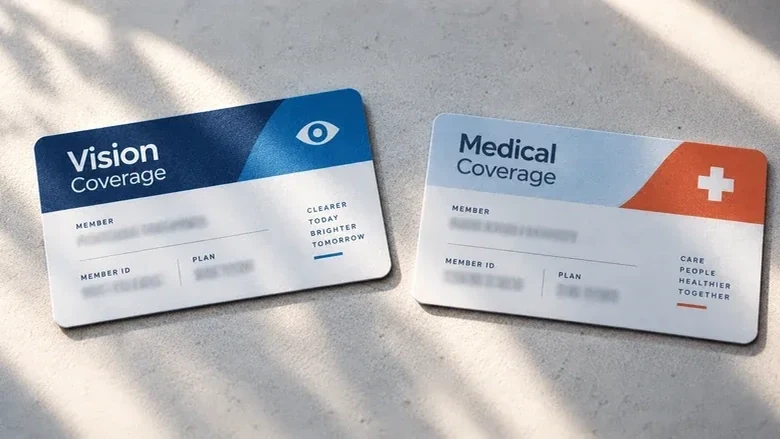 Vision insurance or medical insurance: which applies to an eye visit?Your reason for care, exact plan and selected doctor all matter. Here is how to check coverage without guessing which card applies.