Diabetes and clear vision: why feeling fine does not answer every eye-health question
Seeing well is reassuring, but it does not replace an eye-health assessment. Use these questions to make diabetes care easier to coordinate.

You can read the signs, recognize faces and get through the day without a vision complaint. That is good information to share with your eye doctor. It does not answer every question about how diabetes may be affecting your eyes.
If you have diabetes and no vision problems, the next step is to check when your eye-health evaluation is due. You do not need to wait for a symptom to start that conversation.
What clear vision can and cannot tell you
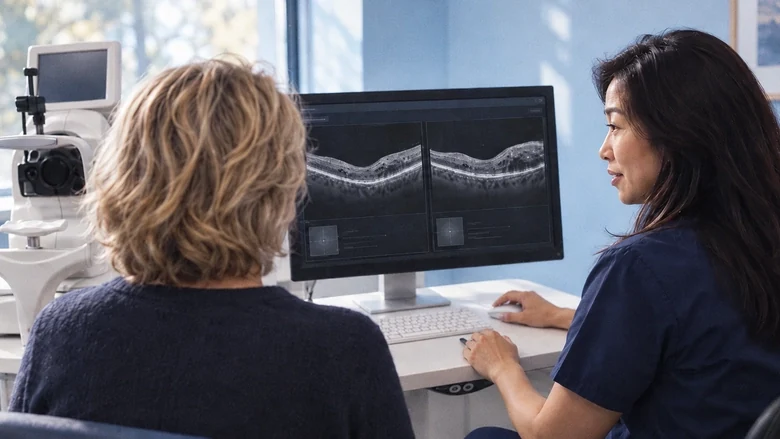
Diabetic retinopathy affects blood vessels in the retina, the light-sensitive tissue at the back of the eye. Early disease may cause no noticeable symptoms. That is why the National Eye Institute describes dilated eye examinations as an important part of diabetes care.
Seeing clearly and having an eye-health assessment answer different questions. One describes your daily experience; the other helps a clinician look for changes you might not notice. Avoid using a good day of vision as a reason to cancel a recommended examination.
AVCC's diabetic eye exam page is a starting point for discussing the care you need.
Turn “I feel fine” into useful questions
Start with what you know about your last examination. Was it a prescription check, a diabetes-related retinal evaluation or both? If you are unsure, say so. Ask the clinician:
- What did the previous examination show, and are those records available?
- What are you assessing today, and is dilation or additional testing recommended?
- Does my diabetes history change when I should return?
- Which changes should prompt a call before the next planned visit?
A useful answer should leave you knowing what happens next. “Come back regularly” is harder to act on than a specific plan discussed with your clinician.
Bring a short record of your care
Prepare a medication list, your diabetes-care clinician's contact information and any earlier eye reports you have. Note changes in your health or treatment since the last eye visit. Ask how to share records through the appropriate channel; a general website question box is not the place for medical documents.
You can use the existing diabetic eye exam preparation guide to organize the practical details. If another clinician needs a report, ask who will send it, what permission is needed and how you can check it arrived.
Diabetic eye exam preparation guide
Plan the visit and the follow-up separately
Ask your selected office about the expected visit category, possible testing, total time onsite and transport if dilation is planned. A diabetes-related evaluation may involve medical insurance rather than routine vision benefits. Medicare has an eligibility-dependent diabetic-retinopathy examination benefit; that does not confirm your coverage or AVCC participation under your exact plan.
For care close to Aurora, Greensburg or Richmond, confirm the office and appointment details before arranging your day. A request still needs office confirmation.
Aurora, Greensburg or Richmond
Common questions
Do people with diabetes all follow the same eye exam schedule?
No single schedule in a blog fits every history. Ask your diabetes and eye-care clinicians when you should be examined and whether an existing finding needs closer follow-up.
Can I wait until my glasses stop working?
Do not use prescription comfort as your only guide. Keep the eye-health assessment recommended for you, even when your current glasses seem adequate.
Should sudden vision changes wait for that visit?
No. Sudden vision loss, new flashes or a curtain-like shadow need immediate eye care or an emergency department, rather than a routine online response. Request a diabetic eye-health evaluation and ask your chosen office what to prepare.
Sources
- Diabetic Retinopathy (NEI)
- Eye Exams for Diabetes (Medicare)
What your visit includes.
No insurance? You can still ask about care. Compare the visit, the fee, and what is separate before sharing contact details.
- Cost
- Self-pay starts at $130 Medical visits can be billed to your medical insurance. Coverage depends on your plan.
- When
- You choose the days Share your preferred days. The office confirms a time.
- Time to allow
- Time varies It depends on your concern and the tests you need. The office will tell you when they call.